


Edition and condition are the two data fields that determine how much a collectible sells for and whether a buyer trusts the listing. Without them, two copies of the same product that differ in value by hundreds of dollars look identical in your store. Getting collectibles edition data right is what an upload team needs to agree on with the merchant before catalog work begins.
Key takeaways
- Edition identifies which release of a collectible a listing covers. Condition records its physical state. Both must appear in every listing.
- Shopify allows up to three variant options per product and 100 variants total (as of November 2026). If you combine edition and condition as separate options, the combinations can reach that limit quickly on high-edition items.
- The practical solution for large collectibles catalogs: one Shopify product per distinct edition, with condition as the only variant option.
- Your upload team needs clear grading source rules before they start: whether condition comes from PSA, Beckett, Funko, or the merchant's own grade scale.
- Collectibles edition data for upload teams means more than just noting "first edition": it includes numbered print runs, variant markings, and any manufacturer designation that affects value.
What collectibles edition data an upload team needs
Edition identifies the specific release of a product. For a trading card, it might be the print run. For a figurine, it might be a numbered limited release. For a comic, it might be the printing and cover variant. Your upload team needs the merchant to define what "edition" means for their specific inventory before they begin entering data.
The fields that typically make up edition data are:
| Field | What to record | Example |
|---|---|---|
| Edition name | The manufacturer's label for the release | First Edition, Unlimited, Shadowless, Limited Run |
| Print run number | The numbered identifier, if the item is individually numbered | 027/500, 1st print, Run 3 |
| Variant marking | Any physical marking or symbol that identifies the edition | Shadow on base, copyright symbol placement, holographic foil |
| Year of release | The year the edition was produced, as shown on the item | 1999, 2003, 2015 |
| Format | Whether the item is sealed or open | Factory sealed, opened, graded and slabbed |
The merchant usually knows these details from their sourcing records. If edition data is missing, your team should flag it rather than guess. An incorrectly labeled first edition is a customer service problem and a trust issue.
Shopify's variant system is flexible enough to hold these details, but how you map them to variant options shapes how manageable the catalog stays. The guide on collectibles edition data for upload teams shows the breakdown by product type for the Toys & Games category.
Condition grades and what to include in the brief
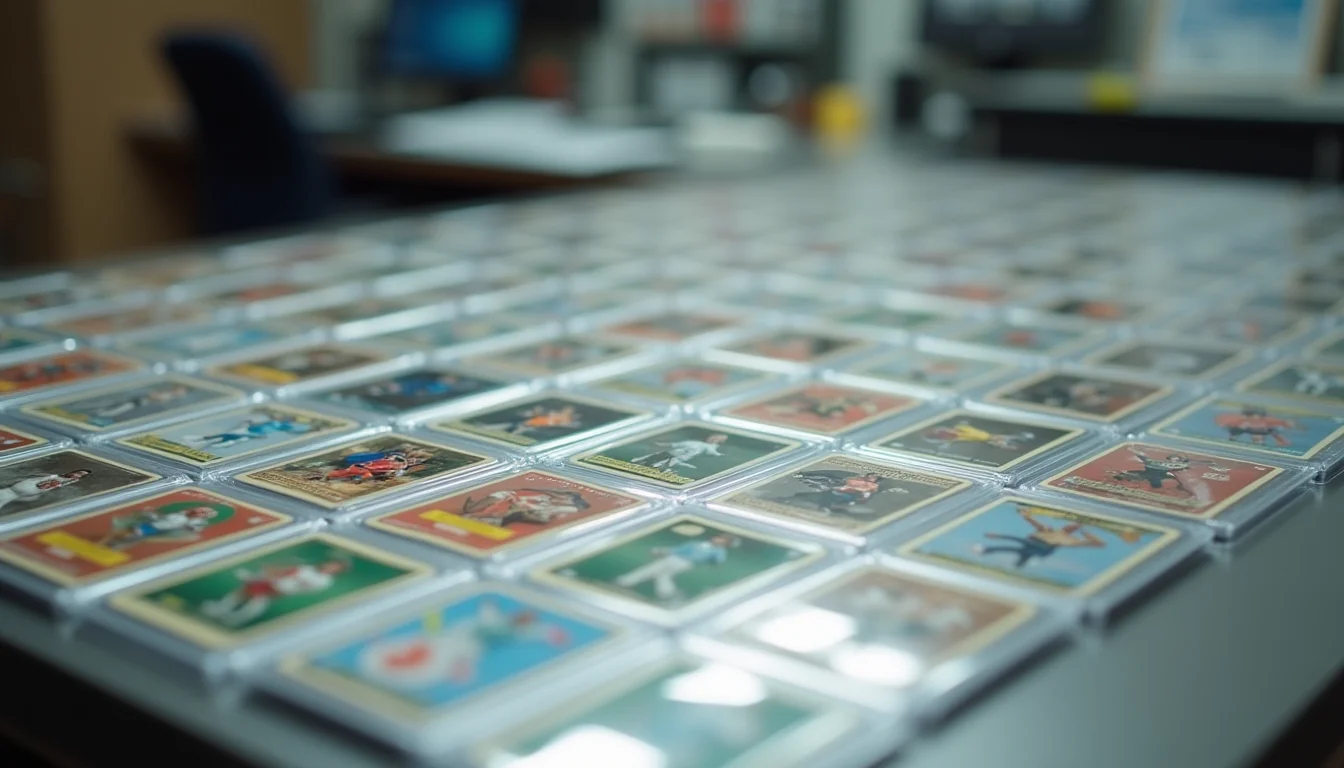
Condition records the physical state of a collectible at the time of listing. For most categories, there is no universal grading standard. PSA grades sealed Pokémon cards, Beckett grades sports cards, and Funko Pop stores use a different set of descriptors for box condition. Your upload team will enter what the merchant supplies, but they need a clear brief on the source.
The most common condition grades across categories are:
- Mint (M): Unplayed, unhandled, in original packaging if applicable. No visible wear.
- Near Mint (NM) or Near Mint-Mint (NM/M): Minimal handling, no visible wear to the naked eye.
- Excellent (EX) or Very Fine (VF): Light play wear. Some may show minor surface marks.
- Good (G): Moderate wear. Edges or surface show clear play use.
- Fair (F) or Poor (P): Heavy wear, creases, or damage. Still complete.
For third-party graded items (cards or figures in sealed slabs), the grade is a numerical score from the grading company:
- PSA grades run from 1 (Poor) to 10 (Gem Mint)
- Beckett grades run from 1 to 10, with half-point increments
- CGC uses a 10-point scale for comics and cards
When the item has a third-party grade, your team should record three additional fields: the grading company name, the numeric grade, and the certification number (the unique serial printed on the slab). The certification number lets a buyer verify the grade independently.
For ungraded items, the merchant's own grade (or their agreed scale) becomes the condition. Your brief should state which scale they use and what the grade abbreviations mean.
For further reading on how Shopify product data entry handles fields that come from client-defined specifications, the service page covers the standard workflow.
Why edition and condition shouldn't share a single Shopify product

Shopify allows each product up to three variant options and a maximum of 100 variants (as of November 2026, confirmed in Shopify's product API documentation). That limit becomes a practical constraint quickly when both edition and condition are options on the same product.
Consider a collectibles store selling a card that exists in four editions (First, Unlimited, Shadowless, Limited) and five condition grades (Mint, Near Mint, Excellent, Good, Fair). That combination produces 20 variants, which is well within the 100-variant limit. But if the store also wants to split by format (sealed versus opened), they now have three options and 40 variants. Add a fourth distinguishing attribute (such as regional print variants) and they have exhausted the three-option limit that Shopify enforces per product.
The cleaner approach for most collectibles catalogs:
- Create one product per edition. Each edition is its own Shopify product with its own title, price point, and product images.
- Use condition as the only variant option. The number of conditions is usually capped (5 to 8 grades), which keeps variant counts manageable.
- Add format (sealed or opened) as a second variant option when the merchant sells both on the same listing. This adds a second option but doubles the variant count. Flag this in your brief if the item has many conditions.
- Use tags for grading company. A tag like "PSA" or "Beckett" does not add to the variant count and makes the catalog filterable.
This structure means a first-edition Pokémon card and a second-edition version of the same card are separate products in Shopify, with their own URLs, pricing, and images. This matches how most collectors search and buy: they know exactly which edition they want. They filter by condition from there.
The exception is when a merchant sells only a single condition grade across all their inventory (for example, only Mint-condition sealed items). In that case, edition can be the variant option and condition becomes a fixed descriptor in the title or description.
Fields to include in every collectibles listing
The following fields cover the full data set your upload team needs to complete a collectibles listing in Shopify. Use this as the starting point for your brief.
| Field | Shopify location | Notes |
|---|---|---|
| Product title | Title field | Include the edition name in the title: "Charizard Base Set, First Edition" |
| Condition | Variant option 1 | Use the grade abbreviations from your agreed scale (Mint, NM, EX, etc.) |
| Format | Variant option 2 (if applicable) | Sealed or opened. Only add this option if the merchant sells both states |
| SKU | Variant SKU | Build a pattern that encodes edition and condition, for example BASE-1ED-MINT-001 |
| Price per variant | Variant price | Condition grades should carry different prices. The merchant supplies these |
| Barcode (GTIN/EAN) | Variant barcode | Sealed items often have a GS1 barcode. Graded slabs do not have a standard barcode. Leave the barcode field blank or use the cert number instead. |
| Grading company | Tag | PSA, Beckett, CGC, or "Ungraded" |
| Cert/slab number | Custom metafield or description | The unique serial on the graded slab. Useful for buyer verification |
| Year of release | Tag or description | Use the year shown on the card or packaging, not the year of grading |
| Category (product type) | Product type | Trading Card, Figurine, Comic, Board Game, etc. |
For more detail on how Shopify handles its variant and product fields, the Shopify Help Center guide on adding and updating products is the starting point. The Shopify Help Center also covers product variants and how option names are set up at the product level.
For related data work your team will also handle, the articles on camera kit listings for upload teams and fitness equipment specs for upload teams show how structured data fields work across other product categories with similar technical complexity.
Frequently asked questions
Should condition be a tag or a variant in Shopify?
Condition should be a variant when a merchant sells the same collectible in multiple condition grades and wants separate pricing for each grade. It should be a tag when every item in a listing is a unique single piece (for example, a slab with its own cert number) or when condition is fixed across the whole range.
What if the merchant uses PSA grades instead of a standard scale?
Enter the PSA grade exactly as it appears ("PSA 9", "PSA 10", "PSA 7") as the condition variant value. Add "PSA" as a product tag. This keeps the grade machine-readable and makes filtering by grading company straightforward.
How do we handle a collectible with no edition marking?
Mark the edition as "Standard" unless the merchant confirms otherwise. Some manufacturers only began adding edition markings after certain print runs, so an unmarked copy from that era may be an earlier print, but that determination belongs to the merchant, not the upload team. Enter what the merchant supplies.
What SKU pattern works for edition and condition combos?
A pattern that encodes the product reference, edition abbreviation, and condition abbreviation keeps SKUs readable. For example: BASE-1ED-MINT-001 (Base Set, First Edition, Mint, item 001). The merchant should define the abbreviations for their catalog. A consistent pattern also makes bulk updates easier when condition grades are added later.
What data does an upload team need before starting on a collectibles catalog?
Before starting, the team needs: the edition name and any physical markings that identify it, the condition scale the merchant uses (or the grading company name for slabbed items), whether the merchant sells sealed and opened separately, variant pricing by condition, and a SKU pattern. Without the edition and condition rules, the team will make assumptions that are expensive to correct later.