


Rock climbing gear data for Shopify covers more variation than most sporting goods categories. A single store can sell ropes across a range of diameters and lengths, protection pieces sized by placement range in millimeters, and climbing shoes in multiple last types. Each product type brings its own field set, and an upload team needs those fields agreed before data entry begins.
Key takeaways
- Climbing ropes require diameter (mm), length (m), UIAA fall count, and dry treatment type as separate fields
- Protection pieces such as cams are sized by minimum and maximum placement range in millimeters, not a standard size scale
- Shopify allows up to 3 variant options per product (as of November 2026); for gear with more attributes, an upload team decides which go in variants versus in the description
- Safety certifications such as UIAA and CE marking belong in the product description, not in product titles or variant option names
- Climbing shoes use EU sizing as the base, with optional UK and US conversions, plus a last-type field that general footwear pages do not carry
Rock climbing gear data: product types in a typical catalog
A well-stocked climbing store usually carries products across several categories: ropes, protection (cams, nuts, hexes), carabiners, quickdraws, belay devices, climbing shoes, chalk and chalk bags, and climbing apparel. Each has a different data shape, and a supplier file often combines all of them in one spreadsheet with inconsistent column names.
Before an upload team starts, it helps to group products by type and agree on the field names and formats for each group. The sections below cover the main ones.
Climbing rope data fields
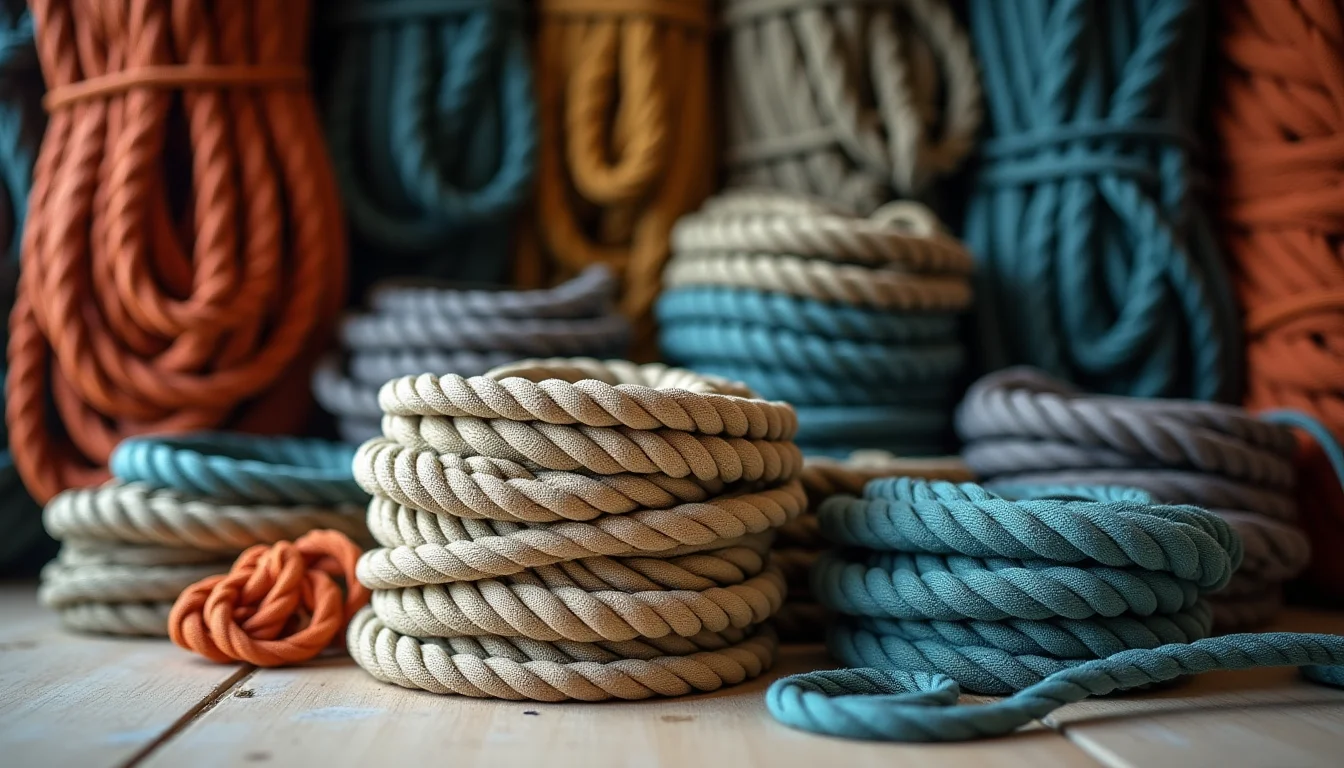
Ropes are one of the more data-intensive product types in a climbing catalog. For each model, an upload team records:
| Field | What to record | Notes |
|---|---|---|
| Rope type | Single, half, twin | Each type carries a different UIAA certification mark |
| Diameter | mm (e.g., 9.8 mm) | Supplier provides the official certified figure |
| Length | Meters (60 m, 70 m, 80 m) | Often a variant option in Shopify |
| UIAA fall count | Number of test falls | A key spec for lead climbers comparing ropes |
| Dry treatment | None, dry sheath, dry core and sheath | Treated and untreated versions are separate SKUs |
| Weight | g/m | Relevant to multi-pitch and alpine buyers |
| Color | Display name from supplier | Often a variant option |
A dry-treated and non-dry version of the same rope model are different SKUs with different prices. If the supplier data sheet lists them on the same row, the upload team splits them. The Shopify product variants documentation covers how to structure these as separate variants or separate products.
Rope type (single, half, twin) is not a size or color variant. It is a product category distinction that affects how the rope is used and what certification it carries. When a store stocks multiple rope types, an upload team typically sets them up as separate products rather than as variants of one product.
Protection piece data fields

Protection encompasses passive gear (nuts, hexes, tricams) and active gear (spring-loaded camming devices, known as cams). Each has its own size language.
Cams:
- Product name and brand
- Size label (brands use their own color-coded and number-based scales; a size 0.5 from one brand is not equivalent to 0.5 from another)
- Minimum placement range (mm)
- Maximum placement range (mm)
- Number of lobes (3-lobe or 4-lobe)
- Stem type (rigid or flexible)
- Weight (grams)
Nuts (passive wedge-shaped protection):
- Nut number or size label (each brand uses its own numbering)
- Minimum and maximum placement width (mm)
- Strength rating (kN)
- Wire material (steel or Dyneema)
- Weight (grams)
Carabiners:
- Gate type: straight gate, bent gate, wiregate, locking, auto-locking
- Shape: D-shape, oval, pear (HMS)
- Major axis breaking strength (kN)
- Minor axis breaking strength (kN)
- Gate opening (mm)
- Weight (grams)
Protection is typically sold as individual pieces, not sets. When a supplier file lists a rack as a bundle, an upload team usually splits it into individual products unless the store sells pre-built racks as a distinct product type.
The strength ratings and certification marks for protection come from the UIAA Safety Standards program, which covers ropes, protection, belay devices, and other technical equipment.
Climbing shoe data fields
Climbing shoe product pages need a few fields that general footwear pages do not use:
- Last type: Neutral (round toe box, comfortable for beginners and all-day climbing), moderate (slight downturn, general performance) or aggressive (sharp downturn, sport climbing and bouldering). This is a primary filter for buyers.
- Closure: Lace, Velcro, slip-on. Often a variant option.
- Rubber compound: The outsole rubber is a key purchase factor; suppliers usually name the compound (for example Stealth HF or Vibram XS Grip).
- Sizes: Climbing shoes are typically sized in EU with optional UK and US conversions. Many models fit narrow; the description should carry the supplier's fit notes exactly.
- Color: Variant option in Shopify; some models come in multiple colorways.
Climbing shoes tend to fit smaller than street shoes. Upload teams carry over the supplier's fit guidance (for example "fits half a size small") into the description exactly as supplied, without editing for tone, since buyers rely on it.
Quickdraw and sling data fields
Quickdraws and slings are smaller items but carry consistent data requirements:
- Length (cm)
- Material (nylon or Dyneema)
- Strength (kN, for the whole unit and for the fabric component separately)
- Weight (grams per unit)
- Gate type on the carabiners (for quickdraws)
- Number of carabiners included (for quickdraws; typically two)
- Color (often identifies the length in a range)
Quickdraws are usually sold as single units or in packs (3-pack, 6-pack). Pack sizes need their own SKU and a component count in the product description.
What to prepare before handing over your upload team
An upload team working on rock climbing gear data for Shopify will ask for:
- Supplier data sheets for each product type, with field labels matching the supplier's naming convention
- UIAA and CE certification details per product model (not at the brand level only)
- Product images organized by SKU or variant, not by shoot date
- Color names as the supplier lists them, not reformatted
- Confirmation of which products are sold individually and which are sold as sets
- Size charts per model, not generic brand charts (climbing shoe sizing especially varies by model)
If the catalog includes both climbing gear and general outdoor apparel, splitting the two into separate batches reduces errors. The field sets are different enough that processing them together slows down the job.
For a broader look at how outdoor gear data is typically structured for handover, see outdoor gear catalog handover for upload teams and outdoor apparel specs for upload teams. For size fields across different sporting goods types, see sporting goods sizes by sport for upload teams.
Shopify product data entry for climbing gear follows the same principles as other technical sporting goods: agreed field names, consistent formatting, and one source of truth before the first product is entered. The Shopify product API reference documents how the product object is structured, which is useful when deciding how to split attributes across variants and the description field.
If you are setting up a new climbing store or migrating an existing catalog, the sports and outdoor product upload service section covers what an upload team handles across the full outdoor sports range, including the sporting goods guides for more product-specific data references.
Frequently asked questions
Can a climbing rope with multiple lengths be one Shopify product?
Yes. A 9.8 mm single rope in three lengths (60 m, 70 m, 80 m) can be one product with a Length variant option. If the same model also comes in dry and non-dry versions, Length and Treatment (dry or standard) become the two variant options. When a third attribute is also purchase-relevant, such as color, the team decides which attribute gets its own product, since Shopify allows up to 3 variant options per product as of November 2026.
How do you handle cams that come in a full set of sizes?
Each cam size is a separate product with its own SKU, placement range, weight and color code. If the supplier file lists them all on one row as a set, the upload team splits them into individual products unless the store specifically sells pre-built racks as a bundle with its own SKU. Bundle products need their component list in the description.
Where do UIAA certifications go on a Shopify product page?
Certifications go in the product description in a dedicated section, not in the title, vendor field or variant names. A title that includes certification numbers becomes harder to scan and breaks naming consistency across the catalog. An upload team carries the certification numbers into a "Safety and certifications" paragraph in the description, exactly as supplied by the manufacturer.
What if the supplier data sheet uses different field names for the same spec?
This is common with multi-brand climbing catalogs. Before data entry begins, the upload team maps supplier field names to the agreed Shopify field names. For example, one supplier might call a placement range "crack width range" and another might call it "placement range (min/max)." A mapping document keeps every product consistent, regardless of how each supplier labels their data.
Do all climbing gear brands use the same size scale for cams?
No. Each major cam brand uses its own size numbering, and sizes do not correspond across brands. A size 0.5 cam from one brand is not interchangeable with a size 0.5 from another. Upload teams record the brand's own size label in the Size field and include the minimum and maximum placement range in millimeters separately, so buyers can compare across brands based on actual placement capability.
