

A sporting goods store might sell a basketball, a tennis racket and a snowboard in the same catalog. Each product has a size field on the supplier data sheet, but each one means something different: circumference for the ball, grip number for the racket, board length in centimeters for the snowboard. When a supplier file collapses these into a single column, an upload team needs to split and reformat them before any entry can begin.
This is a reference to sporting goods sizes for upload teams, organized by category so you know what to send and what format to use.
Key takeaways
- Ball sizes are measured as circumference in official sporting standards, and the official size number (like "Size 5") maps to a measurement range that varies by sport and governing body.
- Racket and bat sports use grip size (expressed as a fraction or decimal inch), shaft length and sometimes weight as separate product fields.
- Board sports use board length in centimeters and waist width in millimeters as distinct fields; these cannot be combined with clothing sizes.
- Youth sporting goods use age-based grids, not S/M/L, and the age-to-size mapping varies by brand and country.
- Sending size data in separate sections per equipment category (rather than one merged column) avoids the most common upload errors.
Why sporting goods sizes for upload teams need separate fields
Apparel uses S/M/L or a numeric scale mapped to body measurements. Most product upload teams know how to structure that. Sporting goods are different because "size" describes the product's physical dimensions, and those dimensions vary by sport type, governing body and player age group.
A basketball cannot share a size attribute with a cricket bat. Each equipment category has its own dimension fields. When a supplier file lists all of them in one "size" column, the variants need restructuring before entry can begin. Catching that early saves rework later.
As of November 2026, Shopify supports up to three option types per product (such as size, age group and color) with up to 2,048 variant combinations. For sporting goods with multi-dimension size systems, planning which three option types to use before the brief goes to the upload team prevents hitting structural limits mid-job. See how to brief a Shopify upload service for a full briefing checklist.
For related data questions in adjacent categories, the activewear product data article covers fabric specs, performance ratings and size runs for performance clothing.
Ball sports: official size numbers and what they mean
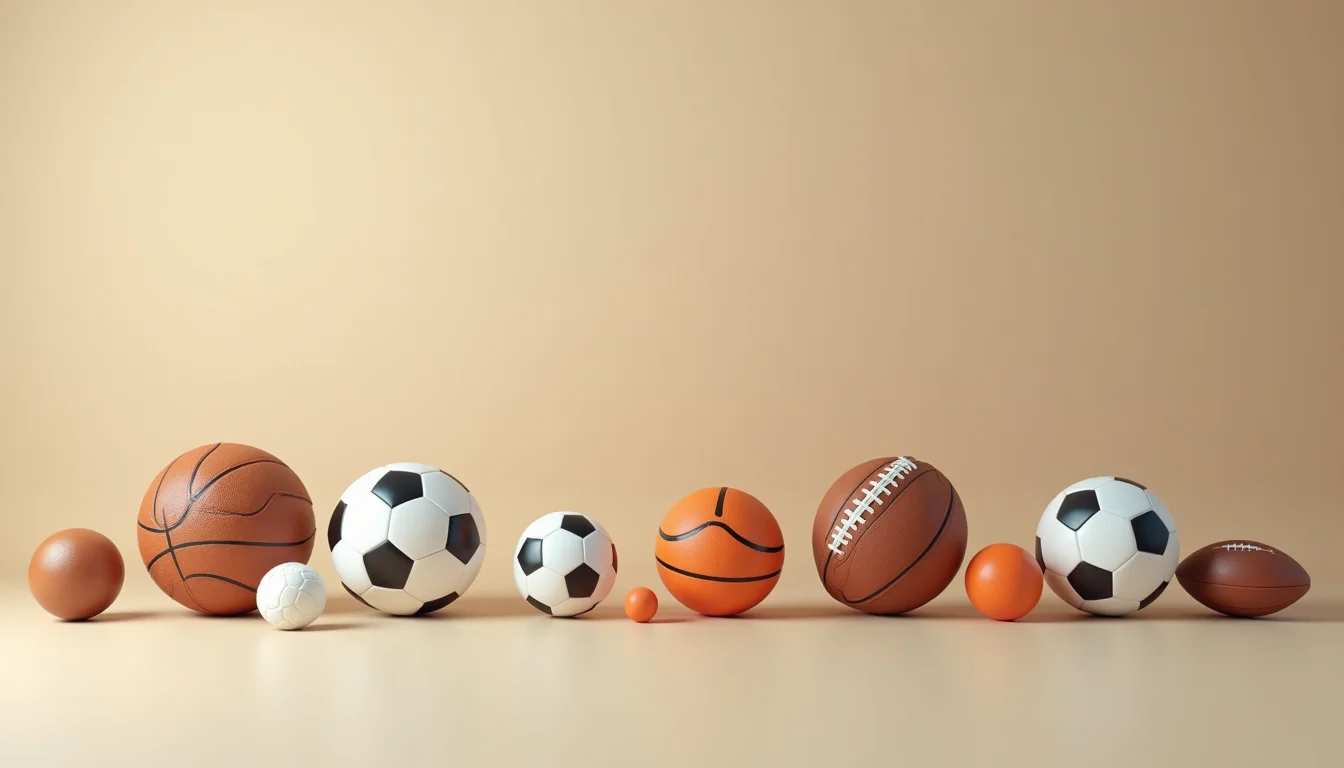
Ball sports use an official size number assigned by the sport's governing body. The number maps to a circumference range, which is what matters for product entry. The same size number means different things across sports: a size 5 soccer ball and a size 5 basketball are not the same circumference.
| Sport | Official size (adult) | Youth size(s) | Standard set by |
|---|---|---|---|
| Soccer / football | Size 5 | Size 4 (under-12), Size 3 (under-8) | FIFA Laws of the Game, Law 2 |
| Basketball | Size 7 (men), Size 6 (women) | Size 5 (junior), Size 3 (mini) | FIBA Official Basketball Rules |
| Netball | Size 5 | Size 4 (youth) | World Netball Rules |
| Volleyball | Size 5 | Size 4 (indoor youth) | FIVB Official Volleyball Rules |
| Rugby union | Size 5 | Size 4 (under-15 and under-18), Size 3 (mini) | World Rugby Laws |
| Australian Rules Football | Size 5 | Sizes 2 to 4 (youth) | AFL standards |
For upload teams, the useful data point is the official size name, not a bare circumference measurement. The Laws of the Game (Law 2) published by the International Football Association Board (IFAB) defines the circumference range for each football size; equivalent standards exist for each other sport listed. Customers searching for a soccer ball typically search by size number and age group. Including both the official size name and the age range it covers in the product data makes filtering easier and reduces returns from customers who ordered the wrong size.
If your store sells balls across age groups, the age group or player level is a separate option type, not part of the size field. Combining them into one label (like "Size 5, Adult") makes filtering harder and wastes one of the three option slots.
Racket and bat sports: grip size, length and weight

Racket and bat sports use grip size as the primary size field, which measures the circumference of the handle, not the racket's overall length. The format varies by sport.
Tennis: Grip sizes run from 4⅛ to 4⅝ inches (or size 1 to size 5 on a European numeric scale), expressed as fractions. A supplier file that lists them as decimals (4.125, 4.25, 4.375, 4.5, 4.625) is consistent, but the display label on the product page should match the format buyers recognize for the market.
Badminton: Adult rackets use a G-scale (G2 through G5 for most adult frames, where lower numbers mean larger grips). The G-scale is specific to badminton; it does not translate to tennis grip sizes.
Cricket: Bats use handle length names rather than a measurement: Short Handle (the most common adult size), Long Handle (for taller players) and Harrow (the main youth size). Junior sizes go from size 1 (the smallest) to size 6, covering roughly ages 4 to 14. The size name is the product option; the specific measurements that map to each name are brand-specific.
Squash and padel: Similar to tennis grip conventions, expressed as fractions or a numeric scale depending on the brand.
Beyond grip, the fields an upload team will typically ask about include total racket length, head size in square inches (which divides the market into standard and oversize categories for tennis), and weight in grams (particularly relevant for badminton and table tennis, where frame weight is a key buying criterion).
A supplier file that bundles these into a single "specifications" cell needs to be broken out into individual columns before entry.
Board sports: length, width and flex
Snowboards, surfboards and skateboards each use different conventions, and none of them are compatible with each other or with clothing sizes.
Snowboards are listed by board length in centimeters and waist width in millimeters. Some products also carry a flex rating, usually on a scale from 1 to 10 (1 being very soft, 10 very stiff). Length and waist width are separate product fields because a rider chooses by both: a rider with narrow boots needs a narrower waist width even at the same length. A board listed by length alone loses the data a buyer needs to match the right board to their bindings. For a Shopify product, length and waist width can each be an option type, with flex as a third if used. See our sports and outdoor product upload service for how we handle these catalogs.
Surfboards list length (in feet and inches, or centimeters), width, thickness and volume in liters. Volume is the most practically useful field for buyers matching a board to their weight and skill level, but length remains the primary search term. Upload teams typically carry all four fields as product attributes, with length as the main variant option if the product varies in size.
Skateboards list deck width in inches (the main size field, typically 7.5 to 8.5 inches for adult riders). Length and wheelbase are secondary attributes. Youth and beginner boards often come in narrower widths; a size range note in the description helps buyers self-select.
For board sports, the most common upload error is mapping board length to clothing sizes. They are not the same field and should not share an option type name.
Youth sporting goods: age grids and what to send
Youth sporting goods use age-based size grids rather than S/M/L. For clothing such as team jerseys and training shorts, the grid is typically an age range (6 to 8Y, 8 to 10Y, 10 to 12Y, 12 to 14Y) or a year number (6Y, 8Y, 10Y). For equipment such as balls and rackets, the governing body publishes the standard for each age bracket.
The challenge: age grids differ between brands, country markets and governing bodies. A "size 10" in one brand's youth hockey clothing does not necessarily match a "10" in another's. The correct approach is to send the brand's own labeled size and the age or height range the brand maps to it, so an upload team can enter both and customers can filter correctly.
When supplier data includes only the labeled size without an age range, the team will request the brand's sizing chart before entry. Including the brand's sizing chart with the product file saves a round of questions and speeds up the job.
The same applies to youth ball sizes: include the governing body recommendation (for example, FIFA's size 4 for under-12s) alongside the labeled size, so the age group can be listed as a second option type rather than embedded in the size name.
What to send your upload team for a sporting goods catalog
The format that creates the least rework is a separate section or tab per equipment category, not a single merged size column. For each category, include:
- The official size name and the governing body or standard it comes from
- Whether sizes are adult, youth or age-specific, and the brand's own age-to-size chart if the age ranges are non-standard
- Any dimension that is a separate buying decision (length, waist width, grip size, flex) listed in its own column, not combined
- The unit for each dimension (cm, mm, inches, grams) stated in the column header
For products that combine a board or equipment size, an age group and a color, the three-option structure on Shopify (as of November 2026) may require consolidating two fields. Flagging these products in the brief before entry begins lets the team decide the structure upfront rather than rebuilding variants halfway through. See what to send your upload team for the broader handover checklist.
Our Shopify product uploading service handles the variant mapping and option structure for sporting goods with mixed size systems. Shopify's support documentation confirms the three-option limit and 2,048 variant maximum that applies to all product types (as of November 2026).
Frequently asked questions
Do different governing bodies use different ball size standards?
Yes. While many sports use a numbered size scale, the circumference range that maps to each number differs by sport and governing body. FIFA's size 5 soccer ball and FIBA's size 7 basketball are both "adult standard" in their sports, but their measurements are entirely different. For upload teams, the useful field is the official size name from the governing body's current rules, not a raw measurement, since buyers search by the standard name.
How should tennis racket grip sizes be listed in a Shopify product?
Use the format your supplier provides and that buyers in your target market recognize. In US and Australian markets, fractional inch sizes (4⅛, 4¼, 4⅜, 4½, 4⅝) are standard. Some brands use a numeric European scale (1 through 5); if your catalog mixes both, the upload team will standardize to one format for the product. Include the unit (inches) in the option name so it reads clearly in the storefront.
Can a snowboard product have length, waist width and color as three options on Shopify?
Yes. As of November 2026, Shopify supports up to three option types per product with up to 2,048 total variant combinations. Length, waist width and color each occupy one option slot. If the catalog also uses flex rating as a buying decision, two of the four values need to be combined into one option (for example a "length / flex" combined label), since Shopify has no fourth option type.
What if my supplier file has all sizes in one column?
An upload team splits a merged size column before entry begins. For sporting goods, that means identifying which rows belong to ball sports, which to apparel and which to equipment, then extracting the relevant dimension field for each. The cleaner approach is to send separate tabs per equipment category from the start, with column headers that name the dimension (circumference, length, grip size, waist width) rather than a generic "size" label.