

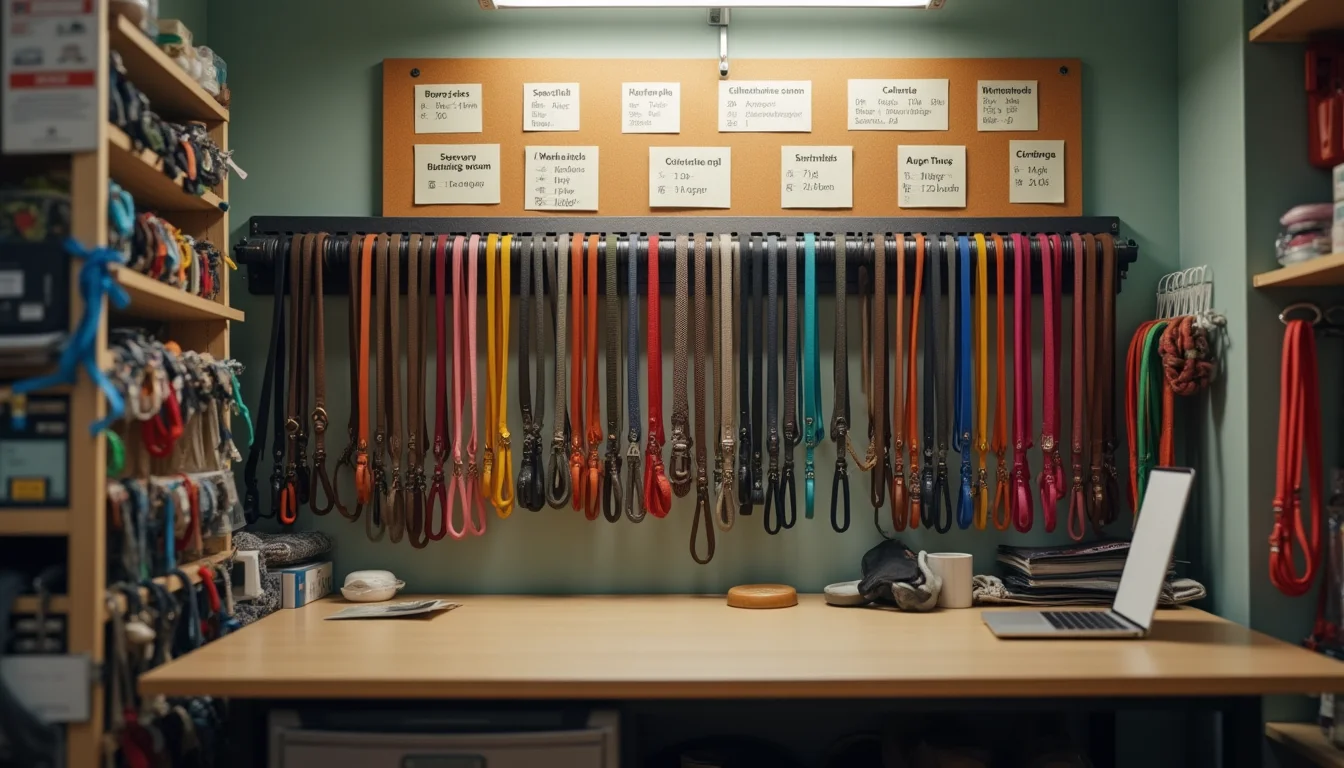
Pet accessories look straightforward until your upload team asks for the size data. A collar listed as "medium" might mean a neck circumference range, a weight bracket, or a breed suggestion, and your team needs to know which one before they can build the variants.
This guide covers the pet accessory data for upload teams that handles the most friction: collar measurements, lead and leash length data, bed and crate dimensions, and the brief template fields that let a job start without a back-and-forth.
Key takeaways
- Pet accessories use at least four distinct sizing systems: weight-based, neck circumference, chest-and-back measurements for walking vests, and linear dimensions. Your upload team needs the right one per product type, not a generic "size" value.
- Collar sizing requires the adjustable range and the weight or breed bracket it covers, not just the size label.
- Beds and crates need three measurements (length, width, height) plus the folded or packed dimensions if the product ships flat.
- A single-page data brief with these fields, sent before the job starts, removes the most common upload delays for pet accessory catalogs.
Why pet accessory sizing is more complex than it looks
Most product categories use one dominant sizing system. Apparel uses garment measurements. Footwear uses a last. Pet accessories are different: the same "size" field can mean four incompatible things within a single collection.
A "medium" collar might indicate a neck circumference range of 12 to 16 inches for one brand and a weight range of 15 to 30 pounds for another. A walking vest listed as "medium" may specify chest girth, back length, or both. A bed labeled "large" gives you nothing without the actual dimensions.
When your upload team encounters these variations without a brief, they either guess or stop to ask. Either outcome adds time to the job. Sending the right fields upfront keeps the job moving.
Collar sizing data
Collar data has two layers: the size label and the measurement it represents.

The fields your upload team needs for each collar variant:
| Field | What to include | Example |
|---|---|---|
| Size label | The label as shown on the product (Small, Medium, Large, or XS to XXL) | Medium |
| Neck circumference range | Min to max in inches or centimeters, as the brand specifies | 12 to 16 in (30 to 40 cm) |
| Weight range | The dog weight bracket the collar fits, if stated by the brand | 15 to 30 lbs (7 to 14 kg) |
| Collar width | The strap width in inches or centimeters | 1 in (2.5 cm) |
| Material | Outer material (nylon, leather, neoprene) and hardware (stainless steel, plastic buckle) | Nylon with stainless buckle |
| Adjustable range | Whether the collar adjusts within the stated range, or is fixed | Adjustable (slider clasp) |
Breeds vary significantly in neck shape relative to weight, so a weight-based size does not reliably predict fit. If your brand provides a breed suggestion alongside the measurement (for example, "fits most Labradors"), include it as a note in the product description rather than a Shopify option. Shopify limits products to three options and up to 100 variants, and breed names rarely work as purchasable options.
Walking vest and chest-fitting sizing data
Walking vests (chest-fitting designs that clip at the back) use different measurements from flat collars. The standard is chest girth at the widest point, sometimes combined with back length from base of neck to base of tail. Both measurements matter for step-in and vest-style designs.
Fields for walking vest variants:
| Field | What to include |
|---|---|
| Size label | As shown on the product |
| Chest girth range | Circumference (min to max) in inches or centimeters |
| Back length | Base of neck to base of tail, where stated |
| Weight range | As stated by the brand |
| Design type | Step-in, over-the-head, vest, no-pull |
| Material | Main fabric and hardware |
| Clip type | Front clip, back clip, dual clip |
For cat-sized walking vests, the ranges compress significantly. Most cat-sized designs fit neck circumferences of 8 to 14 inches and chest girths of 12 to 20 inches. If your catalog includes both dog and cat sizes, treat them as separate product types with separate size tables to avoid variants that span incompatible measurement ranges.
Beds, crates, and furniture dimensions
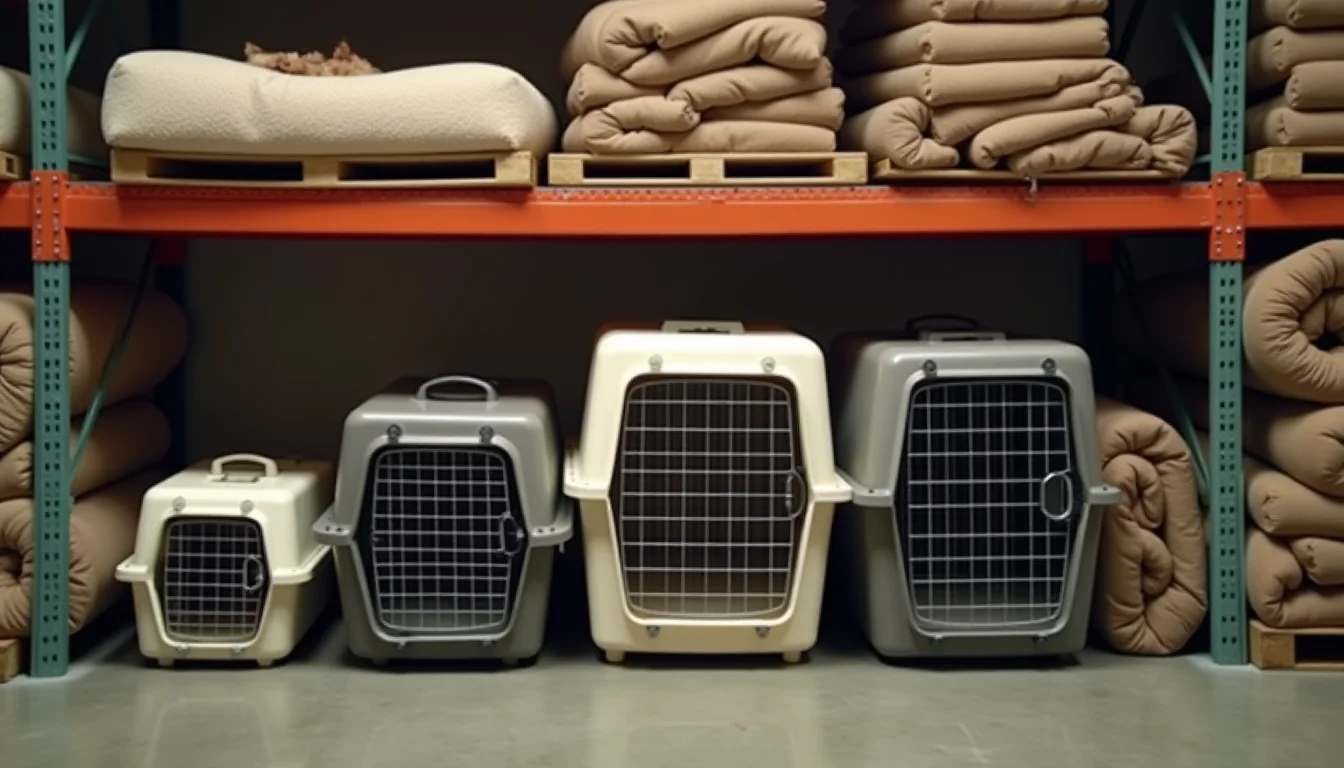
Beds and crates are the category where missing dimensions cause the most customer returns. The fields that matter:
Beds:
- Outer dimensions: length x width x height in inches or centimeters
- Inner dimensions (for enclosed or bolstered beds): the sleeping surface only
- Fill weight or type: memory foam density, polyfill, cedar chips
- Weight capacity: the maximum animal weight the bed supports, if stated
- Machine washable: yes or no, with wash temperature if relevant
Crates and carriers:
- External dimensions: length x width x height
- Internal dimensions: the usable space
- Door opening dimensions: height x width, so customers can confirm it fits their dog
- Folded or flat-pack dimensions: if the crate collapses, the packed size matters for shipping and storage
- Material: wire gauge, ABS plastic grade, fabric and frame for soft-sided crates
- Weight: the crate's own weight, relevant for travel carriers
- Airline compliance: if claimed, include the certification or airline program name
As of November 2026, Shopify's product details page supports a weight field in the product, but custom dimensions (length, width, height) go in the product description or metafields. Tell your upload team which approach your store uses before the job starts.
Toys, bowls, and accessories: the remaining fields
Toys and bowls need fewer size-related fields but have material and safety requirements that affect how the description reads.
Toys:
- Size: toy length and width in inches (not a size label, actual measurements)
- Material: main material (TPR rubber, latex, rope, plush) and stuffing if any
- Chew level: manufacturer's rating if provided (for example, "moderate chewer" or "power chewer")
- Age suitability: puppy, adult, senior, all ages
- Interactive features: squeaker, treat dispenser, rope ends
Bowls and feeders:
- Capacity: in fluid ounces and milliliters
- Bowl diameter and depth
- Material: stainless steel gauge, BPA-free plastic, ceramic
- Base: non-slip base yes or no
- Dishwasher safe: yes or no
For our pet supplies product upload service, these fields come from the brand's data sheets or product packaging. If your supplier provides a spec sheet in metric and your store displays imperial, tell your upload team which unit to show first. They can record both.
Pet accessory data brief for upload teams
Send this with your first batch of products. It removes the questions that slow a job down.
Store and catalog context:
- Store URL and primary currency
- Product types in this batch (collars, walking vests, beds, crates, toys, other)
- Size system preference: metric, imperial, or both shown
- Sizing basis: weight, measurement, or both (per product type if mixed)
Variant rules:
- Options in use: Size, Color, Material (Shopify allows up to 3 options per product)
- How to handle size-and-color combinations (for example, is "Medium / Red" one variant or two separate entries)
- SKU format: prefix + size + color code, or brand's existing format
- Naming convention for accessories that share a base product but differ in length (for example, 4 ft vs 6 ft lead)
Data sources:
- Where the size data lives: brand spec sheets, packaging, supplier CSV, website
- Who to contact if a measurement is missing
Images:
- Number of images per product
- Shot types in order: white background, lifestyle, detail, size-reference shot (a hand next to the product, for example)
- File naming: brand supplies naming conventions, or upload team assigns
For Shopify data entry services that handle accessories regularly, this brief takes about ten minutes to fill in and can remove an equal number of back-and-forth emails per batch.
Related reading: Pet Food Data to Send Your Shopify Upload Team covers the separate data requirements for pet food products. For the general briefing process, Briefing a Shopify Upload Service: What to Include walks through the full handoff.
Frequently asked questions
Do I need to provide measurements in both metric and imperial?
Not necessarily. Provide measurements in the unit your brand uses on packaging. If your store serves customers in multiple countries, tell your upload team which unit to display first and whether to show the conversion in brackets. They record both during the upload if you specify this upfront.
How should I handle accessories that come in a size range rather than fixed sizes?
List the minimum and maximum measurements for each size label. For example, "Small: neck 10 to 14 in, adjustable" is more useful than "Small" on its own. Your upload team enters this as the option label and includes the full range in the product description.
What if my supplier's size data uses different units than my store?
Flag this in your data brief before the job starts. Your upload team can convert measurements during the upload, but they need to know which unit the store will display. Metric and imperial conversions done mid-job without instructions lead to inconsistency across the catalog.
Should beds and crates list external or internal dimensions in the product title?
No. Dimensions belong in the product description or a size table, not the title. The title should identify the product (name, type, possibly size label). Your upload team will add the full measurements to the description field, keeping the title clean for search.
How do I handle pet accessories that fit multiple species such as dogs and cats?
Treat them as separate variants if the sizing differs, or use the product description to explain the range. Shopify options work well when each value is a purchasable variant: a "cat size" and "dog size" label works if the chest girth range is different. If the same size fits both, note that in the description rather than creating redundant variants.