

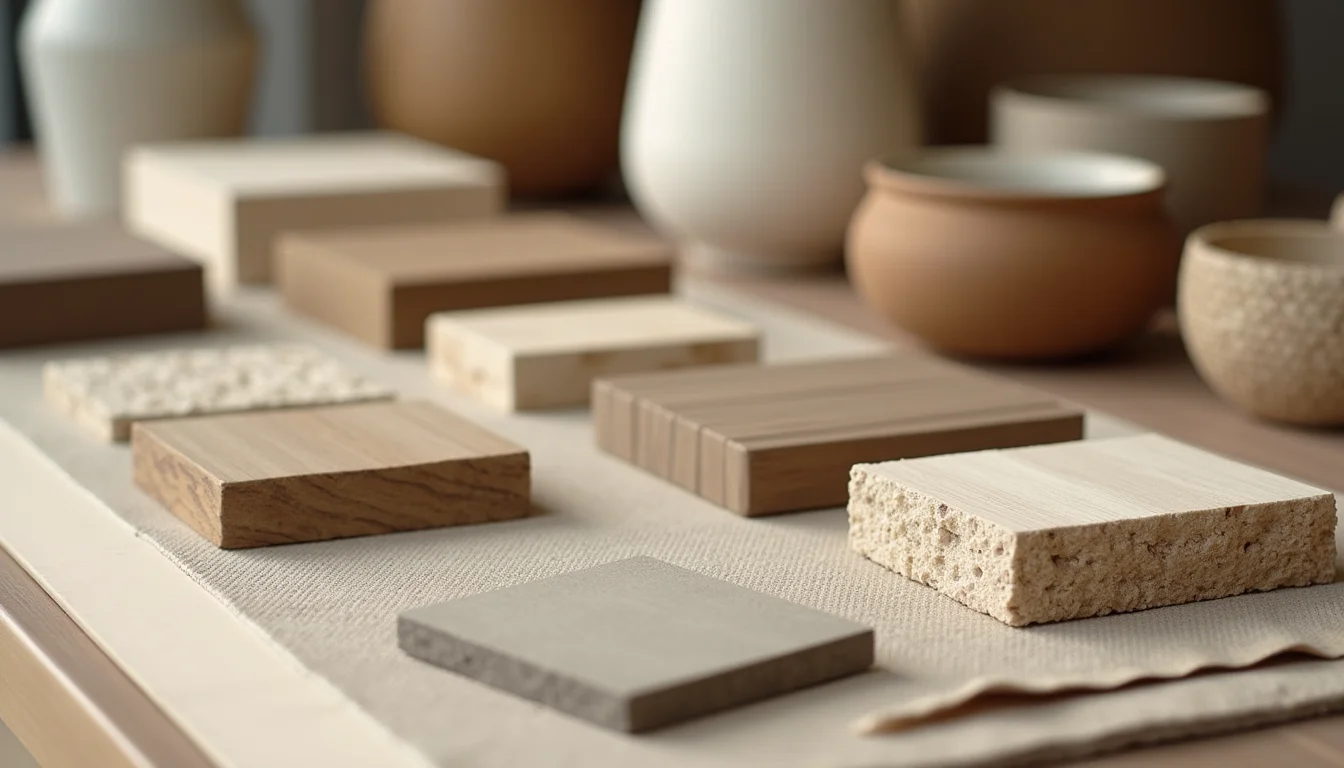
Say a home decor store adds wall shelves in three finishes: natural oak, matte black, and gloss white. The supplier spreadsheet uses "Natural Oak," "Matte/BLK," and "Gloss Wh." Before an upload team enters these, home decor finish options for teams need a consistent structure: which dimensions become Shopify options, what the values are, and how they combine.
Key takeaways
- Home decor products often need 2 to 3 Shopify options to cover their finish dimensions: material, surface finish, and color or pattern. Shopify allows only 3 options per product, so choosing which dimensions to combine matters.
- When a product's finish options produce more than 100 unique combinations, the catalog team needs to split the range into separate products or move one dimension to metafields.
- Consistent naming ("Matte Black," not "Matte/BLK," "Matt. BLK," and "Matte-Black") is what lets collections filter by finish and lets customers browse by material or surface type.
- Specifying finish option names and values in your brief means the team can enter products without guessing, which avoids a round of corrections after upload.
What "finish" covers for home decor products
For most home decor categories, "finish" is not one thing. It covers four distinct dimensions:
| Dimension | What it describes | Examples |
|---|---|---|
| Material | What the item is made of | Solid Oak, Black Metal, Rattan, Marble, Ceramic |
| Surface finish | How the surface is treated or textured | Matte, Gloss, Satin, Brushed, Distressed, Natural, Polished |
| Color | The visual color of the product | Black, White, Natural, Sage, Terracotta, Walnut |
| Pattern | The surface design, used for textiles and wall art | Solid, Geometric, Floral, Striped, Abstract |
A ceramic vase needs "Color" and "Surface finish" as options (the gloss ivory version and the matte ivory version are genuinely different products to a shopper). A wooden shelving unit might need "Material" and "Surface finish" (Solid Oak Matte vs Solid Oak Gloss). A scatter cushion might need "Color" and "Pattern." Each combination creates a separate variant row in Shopify.
The overlap between dimensions is where stores run into trouble. If a product's color already implies its material ("Walnut" only comes in timber, "Black Metal" only comes in powder-coated steel), combining color and material into one option makes sense. If colors appear across multiple materials, they should stay separate.
Shopify's 3-option limit and what it means for finish
Shopify products support up to 3 options, with up to 100 total variants per product (as of November 2026; see Shopify's product options documentation). For home decor, this means:
- A shelving unit in 3 materials × 3 finishes = 9 variants (fine)
- A rug in 3 colors × 4 sizes × 2 patterns = 24 variants (fine)
- A cushion cover in 6 colors × 3 patterns × 4 sizes = 72 variants (still within the limit)
- A decorative tile in 5 colors × 5 finishes × 5 sizes = 125 variants (exceeds Shopify's 100-variant limit)
When a product's combinations exceed 100, there are two paths. Split the product by one dimension: "Geometric Tiles" and "Solid Tiles" as two separate products, each with the remaining options. Or move one dimension to metafields, using it as reference data rather than a purchasable option. The right choice depends on whether a customer needs to choose that dimension at the point of purchase or simply wants to see the information.
For example, say a ceramic planter comes in 5 colors, 4 finishes, and 3 sizes. That is 60 combinations, within the limit. But if the range grows to 7 colors next season, the team will need to adjust. Deciding early whether color or finish is more important to filter by (and planning to combine the other) prevents restructuring later.

Naming home decor finish options for a catalog team
Consistent naming is the part of home decor finish options for teams that most supplier files get wrong. When a supplier lists "Matt Black," "Matte Black," "MBL," and "Matte/BLK" across different rows, an upload team has to guess whether these are the same value or four different variants.
The naming rule: singular values, Title Case, no abbreviations, specific enough to distinguish variants from each other. Here is a comparison:
| Dimension | Use | Avoid |
|---|---|---|
| Material | Solid Oak, Black Metal, Spun Cotton, Recycled Rattan | Nat. Oak, BLK Metal, Cotton/Spun |
| Surface finish | Matte, Gloss, Satin, Brushed, Distressed, Polished | Matt., Gl., Sat, Brush., Dist |
| Color | Natural, Black, White, Sage, Stone, Terracotta | Nat., Wht, Blk, Brn |
| Pattern | Geometric, Floral, Striped, Solid | Geo, Flrl, Strpd, Plain |
For combined options, use a space between values in a consistent order: "Matte Black Metal," not "Black Metal Matte" and "Metal, Matte Black" in different rows. The team applies your names; they don't create them from scratch unless you brief them to. If your supplier data has mixed formats, a reference sheet that maps each supplier value to your standard name before the upload starts works well.
This matters for collection filtering, too. If you plan to run a "Natural Materials" collection, the option value "Solid Oak" and "Solid Rattan" can both feed into it. If the same material appears as "Oak," "Nat. Oak," and "Solid Oak" across products, your collection filter will miss some. The collections and categories guide covers how Shopify uses option values for collection conditions.
Which finish dimensions to make Shopify options
A short decision process for each finish dimension:
- Will a customer choose between this at purchase? If yes, it needs to be a Shopify option. A shopper choosing between a matte or gloss ceramic vase needs it as a selectable option.
- Do you plan to filter a collection by this dimension? If yes, it needs to be a Shopify option. A "Matte Finish" collection only works if matte is an option value, not just text in the description.
- Does this dimension combine with every other finish dimension? If a material comes in every finish and every color, it works as a separate option. If it only comes in one finish, it may belong in the product title or a combined option value instead.
- Will the number of combinations stay under 100? If not, one dimension needs to be a metafield or split out.
For Shopify metafields, good candidates from home decor finish data include: exact wood grain percentage, heat or water resistance ratings, certifications, and care instructions. These add information without affecting which variant a customer selects.
For home and garden product uploads, our team handles this analysis as part of the Shopify product data entry process. The variant structure question comes up early, before data entry begins, because it affects how every product row is built.

What to include in your options brief
A catalog team working on a home decor range needs a few things decided before the job starts:
- Option names and types: which dimensions are Shopify options (Material, Finish, Color, Pattern) and in what order
- A reference list of allowed values: "Material" = Solid Oak, Black Metal, White Ceramic (not "wood," "metal," "ceramic")
- Any combined option names: if "Matte Black Metal" is one option value, the brief should show that explicitly
- Which supplier value maps to which standard name: if the supplier calls it "MBL," the brief should say that maps to "Matte Black"
- What goes in metafields vs options: if heat resistance is in the supplier file but isn't a purchase option, the brief should note it goes into a metafield, not a variant
For parallel examples from other product verticals, the approach to finish and shade naming for makeup upload teams and the material fields in footwear uploads follow the same principle: decide the naming convention before the team touches the data.
The brief doesn't need to be long. A one-page reference sheet with option names, allowed values, and a sample row is enough to let the upload proceed without back-and-forth. The home and garden product upload service covers what this looks like in practice for this category.
Frequently asked questions
How many options can a Shopify product have?
Shopify products support up to 3 options, such as Color, Size, and Material, with a maximum of 100 total variants per product (as of November 2026). The variant count is the product of all option values: 4 colors × 3 finishes × 2 sizes = 24 variants, well within the limit. When a home decor range's combinations approach or exceed 100, the product needs to be split or one finish dimension moved to metafields. The Shopify Help Center has the full details on product options and limits.
Should 'Color' and 'Finish' be the same Shopify option or separate ones?
Separate, if colors and finishes are genuinely independent choices. For a range where "Black" comes in both matte and gloss, and "White" also comes in both, color and finish are independent and should be two options. Combine them when every color is only available in one finish: for example, "Natural Oak" is always matte and "Walnut Stain" is always gloss. In that case, the combined option value ("Natural Oak Matte") removes a redundant choice for the shopper.
What home decor finish details go in metafields instead of Shopify options?
Attributes that inform a shopper but don't change which variant they select are good metafield candidates. For home decor this typically includes: specific timber certification, finish durability ratings, heat or water resistance levels, UV resistance, and care instructions. These can appear on the product page as additional details without creating extra variant combinations. The Shopify Help Center explains how metafields work and how to display them in a theme.
What if products in the same range have different available finishes?
This is a common home decor situation. Say a bookshelf range offers oak in matte or gloss, but the metal version only comes in matte. If you create one product with "Material" and "Finish" as options, Shopify will show gloss as available for metal, which it isn't. The cleaner approach is two products: "Oak Bookshelf" with a Finish option (Matte, Gloss), and "Black Metal Bookshelf" with no Finish option (or a single value). Some stores handle this with a "not available" variant marked as out of stock, but that creates a confusing shopper experience.
Can an upload team decide the finish option structure?
A team can flag when a supplier file has inconsistent naming and ask which format is correct. What they can't do is decide whether "Walnut" and "Walnut Stain" should be one option value or two: that is a product decision that affects how collections filter and how customers search. The brief resolves this upfront. If the brief doesn't cover it, the team will ask, which adds a round of back-and-forth before data entry can start.